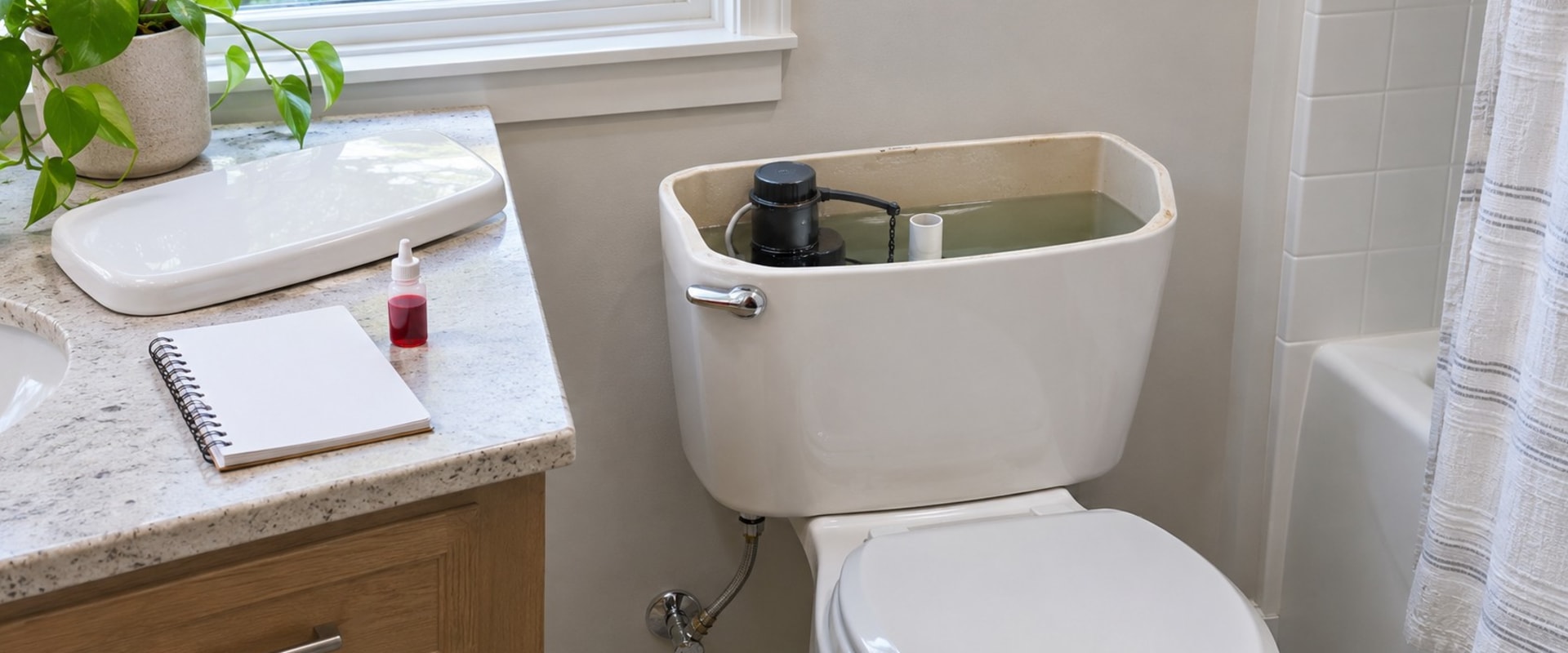
A toilet does not have to make a constant running sound to lose water from its tank. For Portland homeowners, a simple dye test can help make a hidden tank-to-bowl leak visible. Pair the test with a short written record so a repair conversation starts with an observation rather than a guess.
Use the local water bureau’s test
The Portland Water Bureau’s toilet-leak guidance recommends removing the tank lid, adding a dye tablet or several drops of food coloring to the tank, and waiting at least 15 minutes without flushing. If color appears in the bowl, the toilet has a leak. Its guidance also notes that these leaks can be silent.
Read the toilet manufacturer’s instructions first, particularly if the tank or flushing mechanism is unfamiliar. Put a removable ceramic lid somewhere stable where it cannot fall. If you cannot safely access the tank, ask a plumber to carry out the check.
Record the conditions, not just the result
Write down which bathroom you tested, the date, the time you added the dye and the time you checked the bowl. Note whether anyone flushed during the waiting period; a flushed test does not tell the same story as an undisturbed one. A clear photograph of the bowl can help document what you saw.
Also record the symptom that prompted the check: an unexplained refill sound, a concern about water use or a routine maintenance review. Keep these observations separate from a proposed diagnosis. Colored water reaching the bowl does not, by itself, identify every part that may need attention.
Use the result to plan the next step
Our guide to running toilets and common causes provides broader background. For a service appointment, share the test record and the toilet’s make or model if you can find it without dismantling anything. Ask the plumber to identify the cause and explain the repair before parts are ordered.
Keep a follow-up note
After a repair, ask how to confirm that the problem is resolved and when to check again. Save the invoice, part information and follow-up observations together. If the symptom returns, this small maintenance history gives the next technician a clearer starting point than a recollection that the toilet was fixed sometime last year.


